Buyer summary: Compare tape hair, K-tip extensions and hair wefts from a wholesale buyer’s perspective: stylist workflow, maintenance, range planning and sampling.
Start with the professional using the product
A method should not be selected only because it is popular. Map the training level, application time, maintenance cycle and removal workflow of the salons or stylists you serve. A product that does not fit their working method creates support problems even when the hair itself is good.
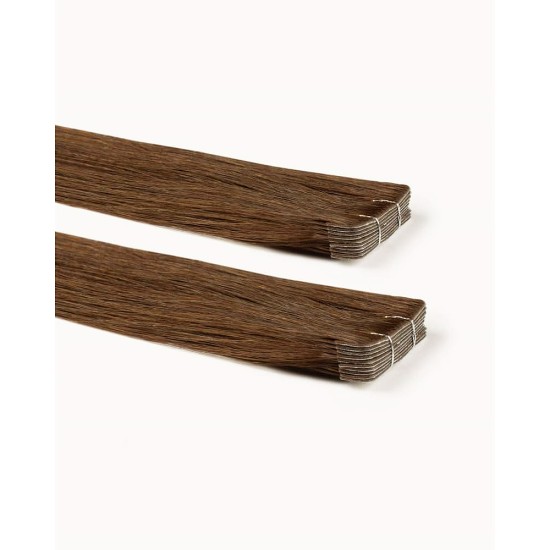
Tape hair: efficient application and a system-led reorder
Tape systems can suit buyers who want a relatively fast salon application and a clear consumables cycle. The commercial brief should cover panel construction, weight, tape compatibility, shade system and replacement tabs—not just length and colour.
K-tips: detailed application and strand-level flexibility
K-tip ranges are often evaluated around bond construction, strand consistency, application tools and stylist technique. Buyers should compare how the bond behaves during installation and wear, then document the approved reference for future orders.
Wefts: construction choice changes the offer
Machine, hand-tied and thinner weft constructions can serve different installation approaches and price positions. Compare seam profile, shedding control, flexibility, density and how the weft will be cut or installed.
Build the sample around a decision
Avoid requesting random samples. Choose representative shades and specifications that answer a real range decision. Record what your team approved, what needs correction and which details must remain consistent on reorder.
Questions buyers ask
Which extension method is best for a new wholesale range?
There is no universal best method. The right starting point depends on your stylist base, customer maintenance expectations, price position and existing colour system.
Should every method use the same colour range?
A shared core shade architecture can simplify the offer, but availability and visual results should be verified for each construction through physical references and samples.