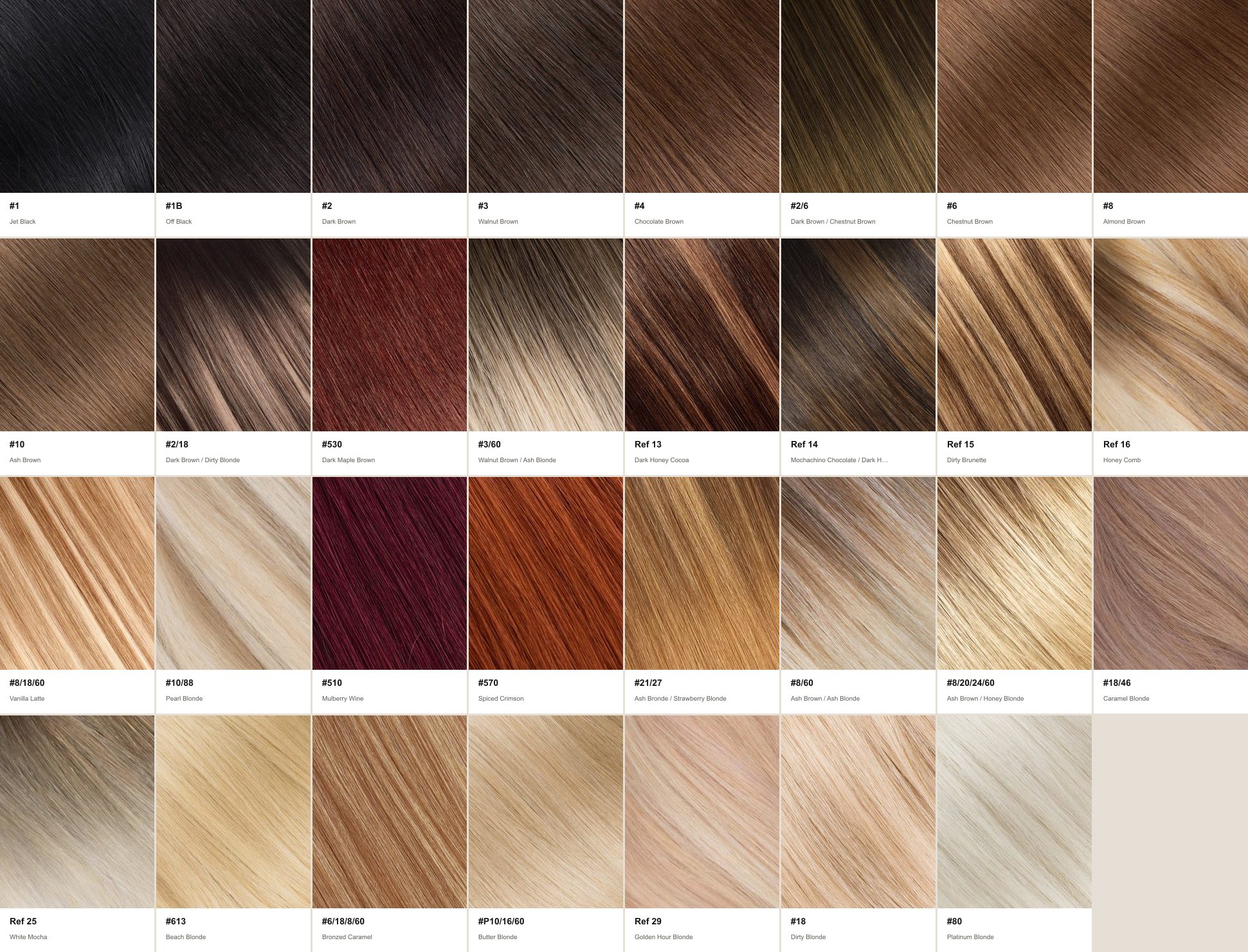
Buyer summary: Learn how wholesale hair buyers can structure core shades, rooted blends, physical references and approval records for more reliable reorders.
Begin with the market, not the largest possible shade list
Review what your salons, distributors or consumers actually request. A disciplined core range is easier to explain, stock and reorder than a broad list with weak shade distinction.
Use physical references
Photography and screens change colour. Establish physical references for core shades and record the lighting and product construction used during approval. The same named shade can appear different across fibres, hair directions and densities.
Explore the 31-shade DS HAIR Colour Chart 2 and physical-reference workflow →
Separate roots, blends and highlights
A shade name should communicate its construction. Record root depth, blend balance, highlight placement and undertone instead of relying only on a short code that different teams may interpret differently.
Test representative constructions
Review colour on the products that matter commercially. A shade on a colour ring does not automatically predict the result on a dense topper, a fine tape panel or a finished synthetic wig.
Control changes through records
When a shade is corrected, date the change and replace the old reference deliberately. Product codes, photos, physical swatches and written approval notes reduce confusion across repeat orders.
Questions buyers ask
Why are physical colour references important for wholesale hair?
Screens and photography vary. A physical reference gives buyers and suppliers a more consistent basis for shade approval and repeat-order communication.
Should a colour system be identical across every product?
Core naming can be shared, but the visual result should be reviewed on representative constructions because material, density and base colour can change the appearance.